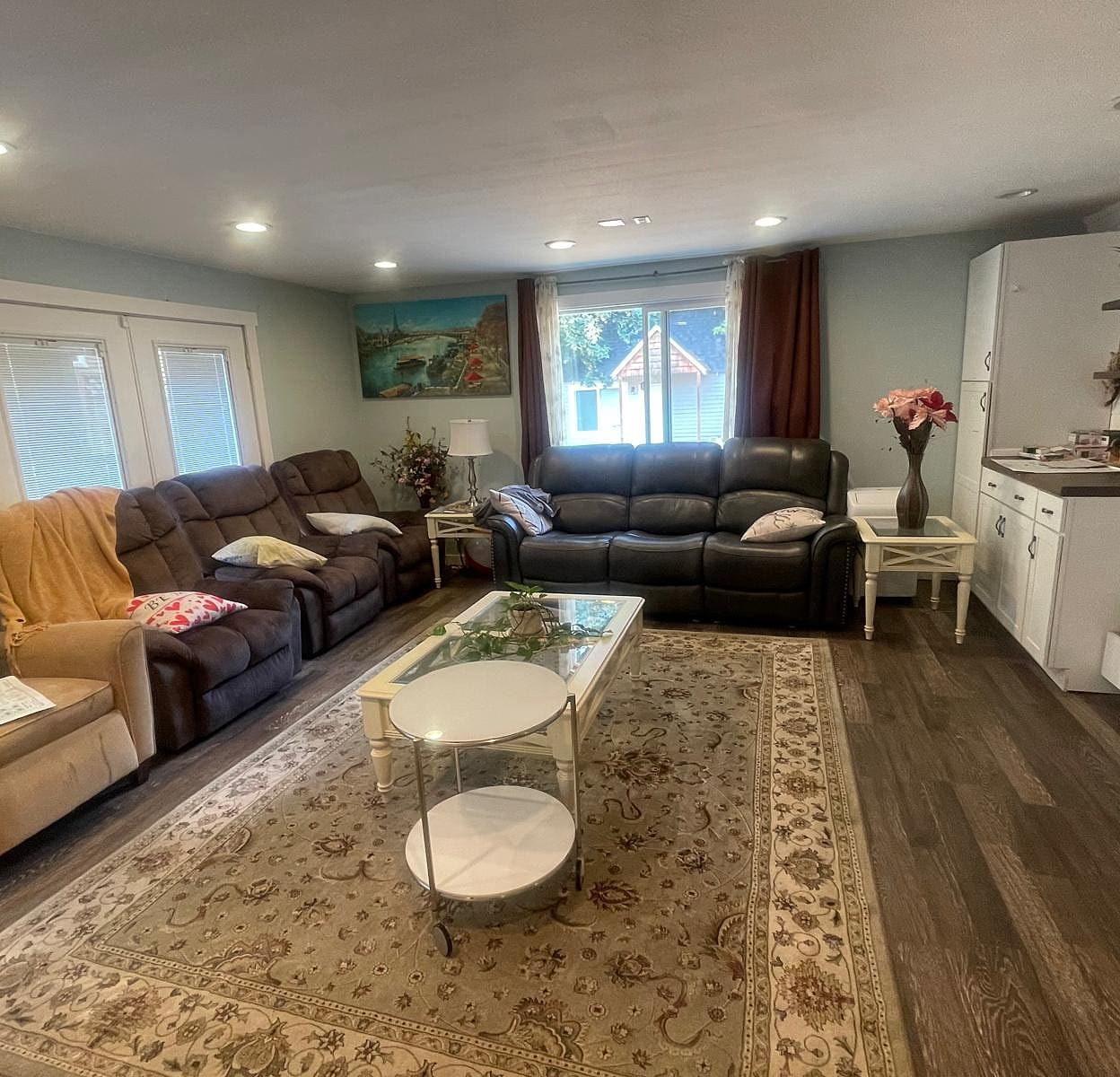
A home built aroundthe people who live in it
Abbey Road Care Homes was opened to run a house the way we always believed one should be run — small enough that nobody becomes a room number.
Why we openedAbbey Road
After more than twenty years working in elder care across the Puget Sound region, Jane Thuo, LPN, had seen both ends of the spectrum: homes where residents were genuinely known, and buildings where the staff changed so often that nobody could tell you what a resident liked for breakfast.
The difference was almost never the budget, the building or the brochure. It was scale, and it was staffing. A caregiver responsible for six people can learn all six of them properly. A caregiver responsible for thirty cannot, however much they care — and most of them care a great deal.
Abbey Road Care Homes exists to be the first kind of place — one of two homes Jane operates alongside Kingsgate Highlands in Kirkland. We chose a real house on a quiet residential street in Edmonds rather than a purpose-built facility, because a house feels like somewhere you live and a facility feels like somewhere you have been put. We licensed for six residents, which is the maximum an adult family home may take, and we have no ambition to grow beyond it.
Everything that follows on this page — our philosophy, our staffing, the way we talk to families — comes back to that one decision about size.
Our family of homes
We also operate Kingsgate Highlands in Kirkland — the same six-resident, nurse-led model in a different neighbourhood.
To care for each resident the way we would want our own parents cared for
That means meeting practical needs impeccably — medication, nutrition, hygiene, safety — and then going further, to the parts that are harder to measure: company, dignity, patience, and the feeling of being somewhere you belong rather than somewhere you are kept.
That no family in Edmonds settles for care they are uneasy about
Too many families accept a placement because they have run out of time and options. We want Abbey Road to be proof that small-household care can be warm, professional and clinically sound at once — and to hold ourselves to that standard on the quiet days as much as the days we have visitors.
Led by a nursewith over 20 yearsof experience
Jane Thuo, LPN
20+ years in elder careOwner & Licensed Practical Nurse
Jane Thuo, LPN, has dedicated her career to serving the needs of aging adults. A skilled and intuitive nurse, she leads talented caregiver teams in providing round-the-clock care with compassion, humour, and clinical soundness.
Abbey Road Care Homes in Edmonds and Kingsgate Highlands in Kirkland share the same philosophy: licensed for six residents each, nurse-led, and run as real households rather than institutions. Jane is personally involved in both homes — families tour, call, and hear from the people who actually run the house.
Residents with age-related conditions, diabetes, Alzheimer's, and a wide range of medical needs are cared for here with kindness and dignity. From home-cooked meals to the quiet attention of overnight staff, the standard is the same at every hour of the day and night.
20+
Years in elder care
2
Licensed homes
24 / 7
Care & staffing
6 max
Residents per home
Clinical focus
- 24-hour adult & elder care
- Alzheimer's & dementia support
- Diabetes & chronic conditions
- Daily living assistance
- Medication management
- Memory care
Jane also operates Kingsgate Highlands in Kirkland — the same nurse-led, six-resident model in a second neighbourhood.
Every member of our care team is background-checked, trained to Washington State requirements for adult family homes, and receives ongoing education in dementia support, safe transfers, medication administration and first aid.
Four things wehold ourselves to
These are not posters on a wall. They are the questions we use when a decision is genuinely difficult.
- 01
Dignity first
Every resident is an adult with a history, preferences and the right to be asked rather than told. Care is offered at their pace, never imposed at ours.
- 02
A real household
One kitchen, one table, six people. We keep the house small on purpose, because it is the only way care stays personal.
- 03
Attention that notices
The value of a small home is that changes get seen early — a quieter mood, a smaller appetite, an unsteady step — while they are still easy to address.
- 04
Honest communication
Families hear from us first, plainly, about difficult things as well as good ones. Nobody should have to guess how their loved ones are doing.
Designed to feellike a house
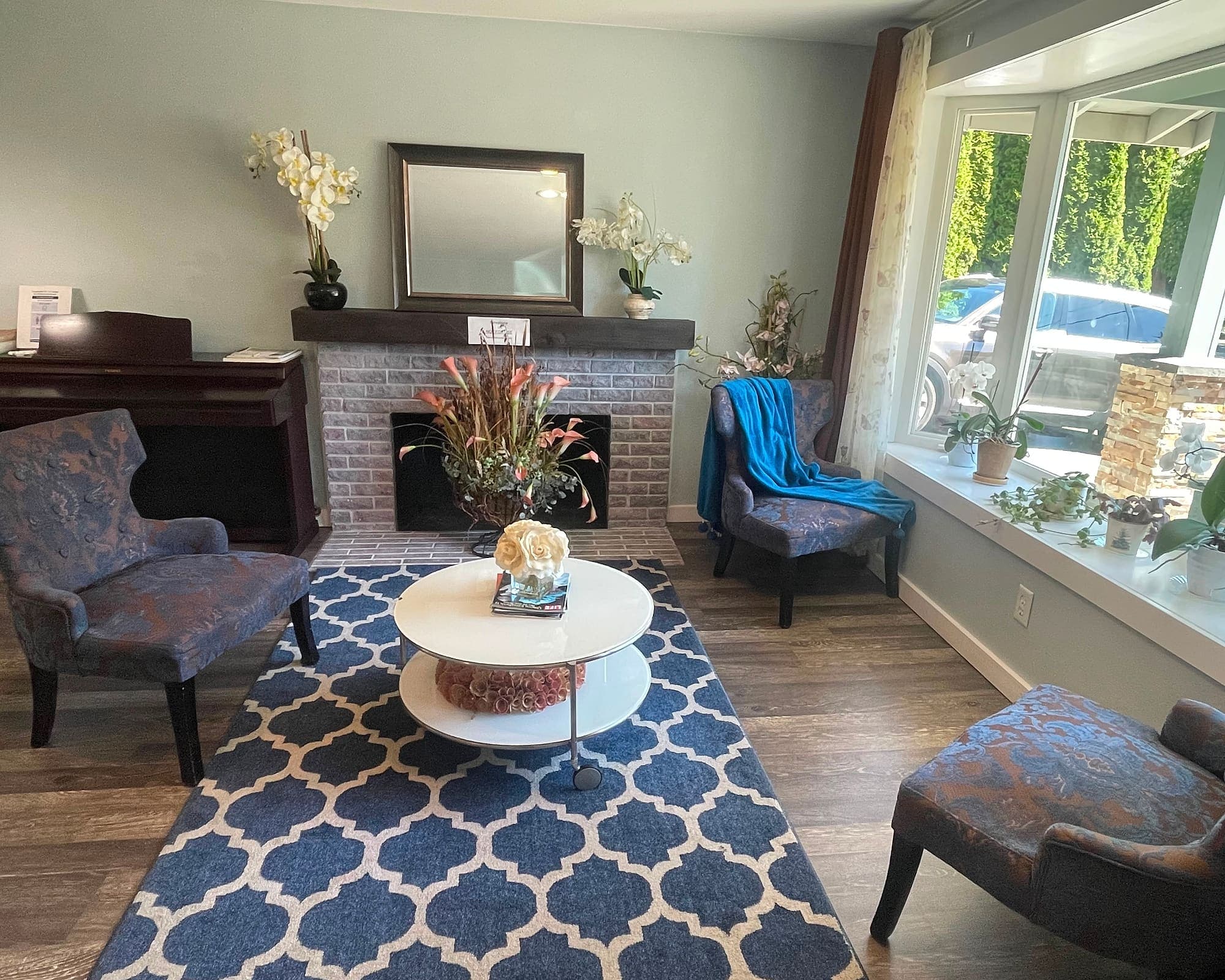
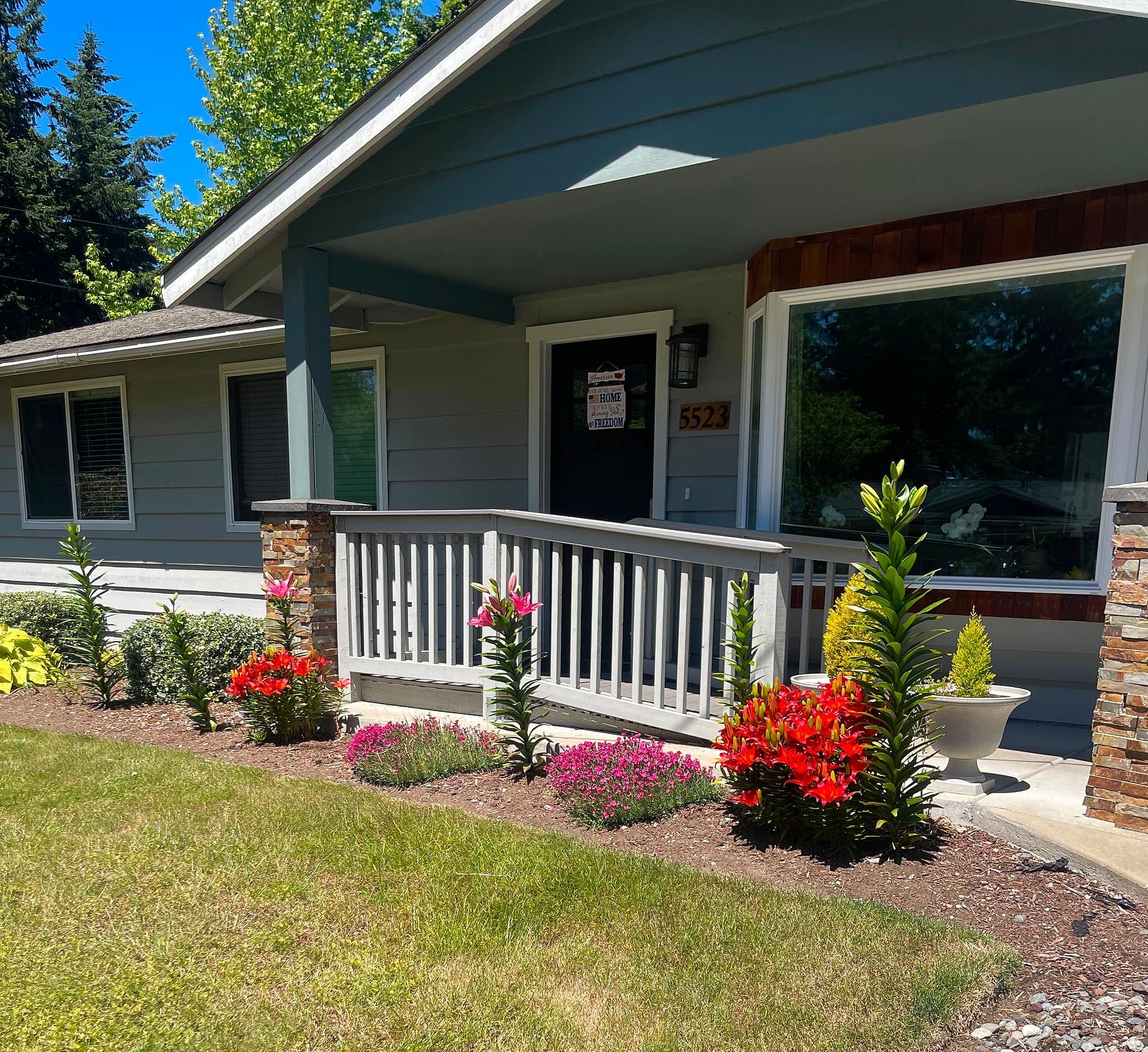
The house is single-storey and step-free throughout, with wide doorways, grab rails at every fixture and a roll-in shower — all of which residents use without it looking like a clinical setting. There are two sitting areas, so a resident who wants company and a resident who wants quiet can both have what they want at three in the afternoon.
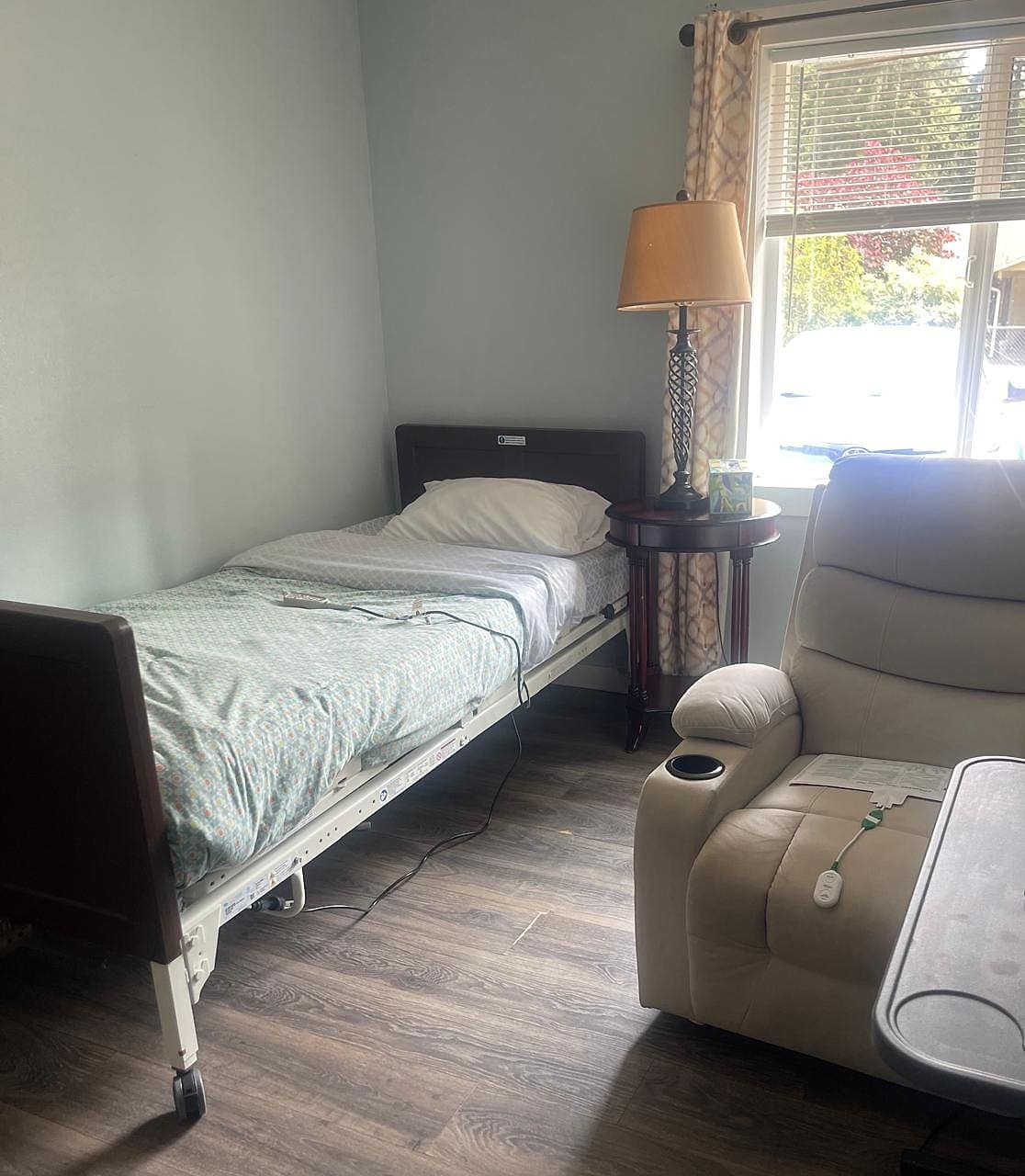
Bedrooms are furnished by the residents themselves. People arrive with their own armchair, their own quilt, photographs of grandchildren and the books they have always kept beside the bed. It matters enormously for settling in, and it matters most of all for residents living with memory loss.
Outside there is a level, planted garden with shaded seating that residents can use on their own whenever they like. The entrances are monitored, so the freedom is real rather than supervised.
Commitment to personalised care
A care plan written for one person
Every resident has an individual plan covering medical needs, routines, preferences and history. It is written with the family, reviewed every quarter, and updated whenever something changes.
Staffing that allows time
Our ratio exists so caregivers can sit down. Time to listen to the same story again is not a luxury in this work — it is a large part of the work.
You hear from us first
We contact families on a schedule and immediately when something changes. You will never learn about a fall or a hospital visit by discovering it on a visit.
Licensed and accountable
We are licensed and inspected by Washington State DSHS, and we welcome scrutiny. Ask to see anything you would like to see.
Continuity as needs increase
We are staffed to support advancing frailty, dementia and hospice care, so residents are not uprooted each time their condition changes.
Visit whenever you like
There are no fixed visiting hours and no appointments. Come at a mealtime, come unannounced — any home worth choosing will be happy to be seen.
What familiestell us
The families below agreed to share their experience so that others deciding on care have something honest to go on. Surnames are shortened at their request.
My mother moved in after a fall, and we expected the adjustment to be painful. Within a fortnight she was asking us to come later so she wouldn't miss lunch with the others. The staff learned how she takes her coffee before we'd finished the paperwork.
Diane R.
Daughter of a resident
What convinced us was the overnight staffing. Dad is up at odd hours and I had spent two years frightened of what happened at 3am. Someone is always awake here. I sleep now, which I had not expected to say about any of this.
Michael T.
Son of a resident
They call me before I call them. When Mom's appetite dropped they had already spoken to her physician and had a plan by the time I heard about it. After years of chasing people for information, that is an enormous relief.
Karen S.
Daughter of a resident
My husband has advanced dementia and we had been asked to leave a larger facility. Here the small size is the whole point — the same faces, the same rooms, every day. He is calmer than he has been in three years.
Patricia L.
Wife of a resident
We used respite care for two weeks while I had surgery. My aunt came home talking about the garden and a woman she'd played cards with every afternoon. She asked when she could go back. She moved in permanently in the spring.
James W.
Nephew of a resident
When Dad went onto hospice they did not move him or change anything. The same people who had looked after him for two years were with him at the end, and they looked after us as well. I will not forget that.
Susan M.
Daughter of a resident
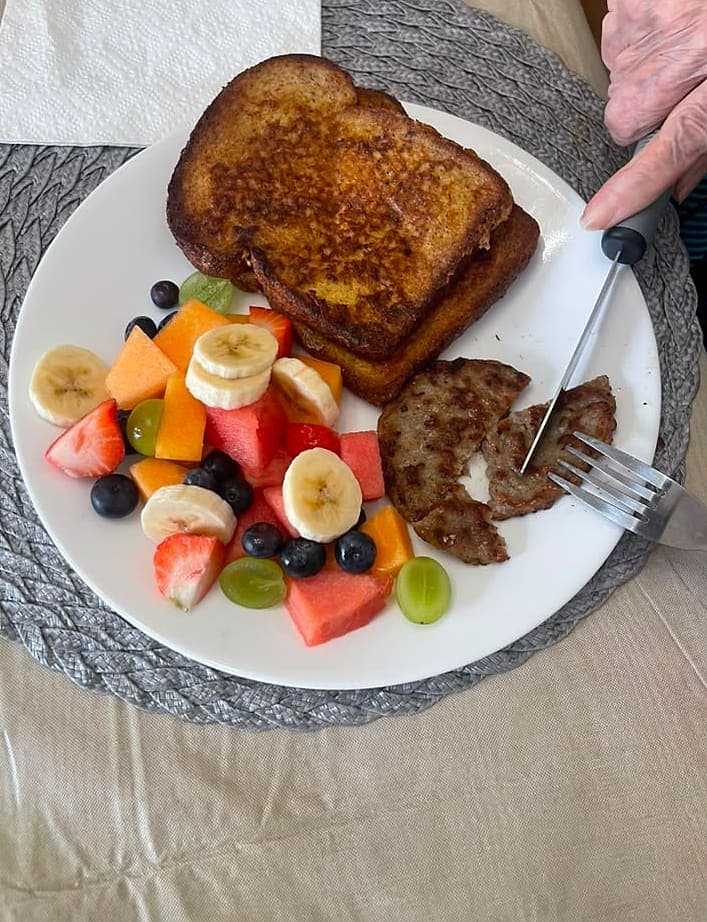
The food is real food. Mom is diabetic and had resigned herself to being given something beige and separate. Instead she eats what everyone else eats, adapted, at the same table. It sounds small. It was not small to her.
Anthony B.
Son of a resident
I visit at all sorts of hours, deliberately, because that is what you do. It is always calm, it always smells like someone is cooking, and my mother is always dressed properly with her hair done. That consistency is the whole thing.
Elaine C.
Daughter of a resident
We are glad to put prospective families in touch with current ones. If you would like to speak to somebody whose loved ones live here, ask us when you visit and we will arrange it — with their permission, of course.
The questionsfamilies ask us
If your question is not answered here, call us. You will speak to somebody who works in the house rather than a call centre, and we will give you a straight answer even when it is not the one that wins us a resident.
Meet us beforeyou decide anything
The best way to judge a care home is to stand in it. Come and see ours — at a mealtime, ideally, when the house is at its busiest.